In our last article, we explored what agentic AI is and why it represents a fundamental shift in how work gets done.
We talked about the 80/20 reality, agents handling routine work while humans focus on complex decisions, and the gradual progression from human-in-the-loop to autonomous operation.
But here’s where many organisations hit a wall: understanding the potential is one thing, deploying agentic AI systems that work reliably in production is something else entirely.
The challenge isn’t the AI itself; that part is getting easier. The challenge is everything else you need to make it work in a real business environment: security, identity management, monitoring, tool integration, cost controls, and orchestration across multiple systems.
Most companies spend 6-12 months building this infrastructure before they can even start solving business problems.
That’s where platforms like Amazon Bedrock and AgentCore come in, which is why our partnership with AWS matters for clients implementing these systems.
The infrastructure gap nobody talks about
Let’s be honest about what it takes to deploy agentic AI in production. You need a lot more than just access to an AI model.
Security and identity management
Your agents need to access multiple systems, internal databases, external APIs, customer data, and third-party tools. Each access point requires proper authentication, authorisation, and audit trails.
In development, you might use test credentials or skip authentication entirely. In production, you need:
- User authentication through your existing identity provider
- Secure credential storage for accessing external services
- Token management for OAuth flows
- Permission controls ensure agents only access what they need
- Complete audit logs for compliance
Building this properly takes 3-4 months of engineering time, assuming you have the security expertise.
Scalability and performance
Your agent might work perfectly when three people are testing it. What happens when 300 people use it simultaneously during peak hours?
Agentic AI has unpredictable resource consumption. Unlike traditional applications, where you can estimate server load, agents use recursive processing, calling AI models repeatedly until a task is complete. The number of iterations depends on task complexity, and each iteration includes the growing conversation history.
You need infrastructure that can:
- Scale dynamically based on demand
- Handle concurrent requests without degradation
- Implement rate limiting to control costs
- Queue requests intelligently during peak load
- Fail gracefully when capacity is reached
Integration with existing systems
Your proof of concept probably accessed one or two APIs in a controlled environment. Production means integrating with legacy systems that weren’t designed for API access, third-party tools with varying authentication methods, internal databases with complex permissions, and real-time data sources.
Each integration needs error handling, retry logic, circuit breakers, and fallback options. When your agent can’t access a critical system, what happens? Does it fail gracefully? Queue the request? Notify a human? Route to an alternative tool?
Monitoring and debugging
When something breaks in a traditional application, you look at logs and error messages. When something breaks in an agentic AI system, you need to understand its reasoning process, the decisions it made, the tools it called, the data it used, and where in the multi-step process things went wrong.
Traditional monitoring tools aren’t built for this. You need AI-specific observability showing the agent’s “thought process,” not just server metrics.
Cost management
POCs usually run on small datasets with capped usage. Production means real costs that scale with actual usage, and AI isn’t cheap.
Every agent invocation consumes tokens. Recursive reasoning multiplies those costs. Without proper management, your costs can spiral quickly, especially as adoption grows.
What Amazon Bedrock and AgentCore actually provide
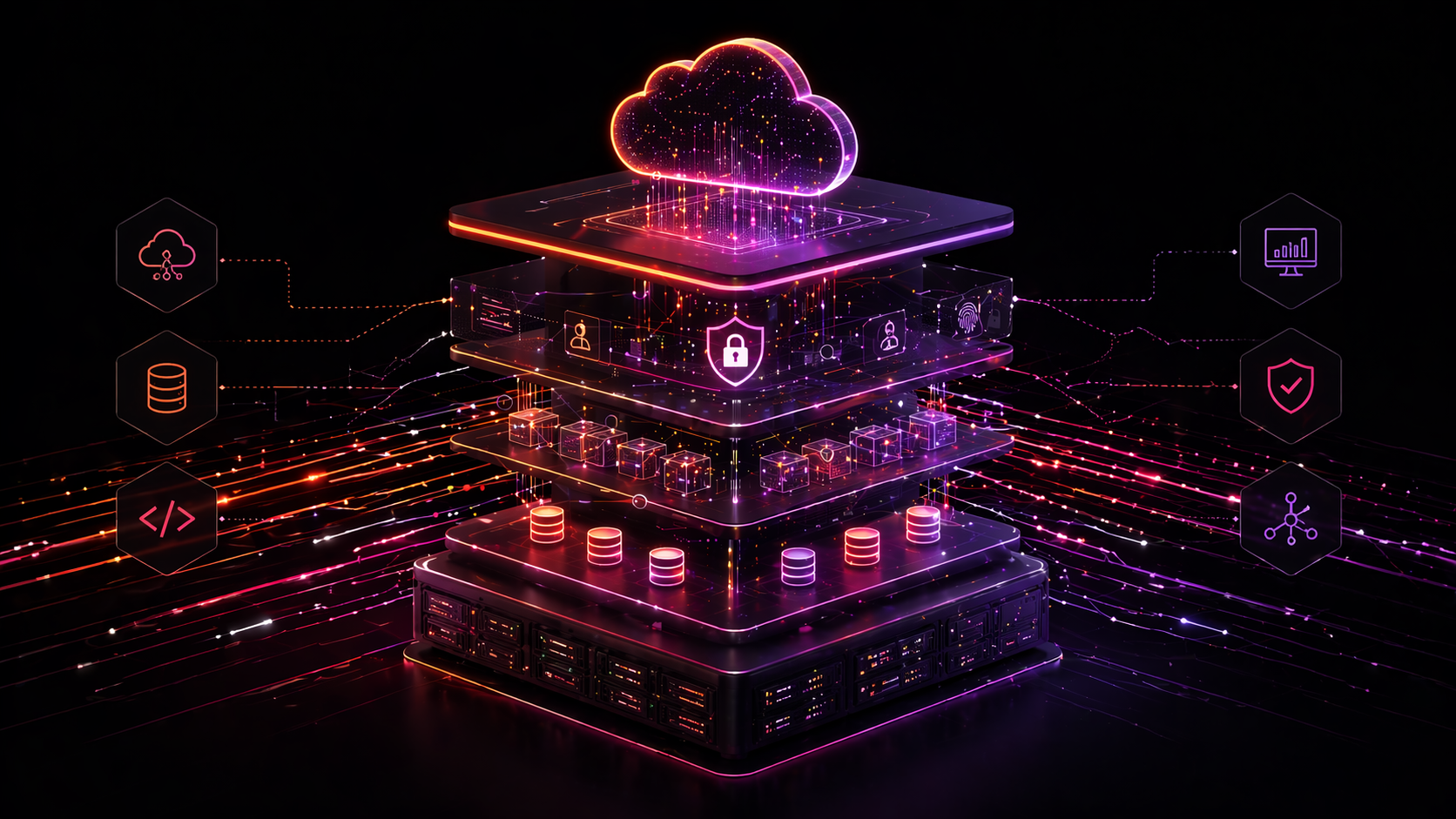
Amazon Bedrock is AWS’s managed platform for building and deploying agentic AI applications. Instead of spending 6-12 months building infrastructure, you get production-ready capabilities from day one.
The foundation (Bedrock):
- Access to multiple AI models (Anthropic, Meta, Amazon, Cohere) so you can choose the best fit for each task
- Managed infrastructure that scales automatically from 10 to 10,000 requests without you managing servers
- Enterprise security with data staying in your environment, not sent to external AI services
- The agent layer (AgentCore): Built specifically for deploying AI agents, AgentCore handles the complexity of:
- Identity and security – who can access agents and what agents can access
- Reliable execution – proper error handling and state management across multi-step workflows
- Memory – agents remember context and improve over time instead of forgetting everything
- Tool integration – standardised connections to your existing systems
- Observability – visibility into agent decisions, confidence levels, and what happened when things need review
The key benefit: these are capabilities you’d otherwise build yourself, authentication systems, monitoring tools, integration frameworks, and security controls. With Bedrock and AgentCore, you can get started immediately, letting you focus on solving business problems rather than building infrastructure.
The build vs. buy decision
We get asked this constantly: “Should we build our own agent infrastructure or use something like Bedrock?”
Here’s our honest take based on working with multiple clients:
Build custom if:
- You have truly unique requirements that no platform addresses
- You have the team, time, and budget to build and maintain infrastructure
- Your competitive advantage comes from infrastructure innovation (rare)
- You need capabilities that don’t exist in any platform yet
Use managed infrastructure like Bedrock if:
- You want to move quickly from POC to production
- Your team should focus on business problems, not infrastructure
- You need enterprise-grade security and compliance
- You want to leverage ongoing platform improvements
- Infrastructure isn’t your core differentiator
For most organisations, using managed infrastructure makes sense. You can always build custom components for truly unique parts of your solution while leveraging proven infrastructure for everything else.
The real cost equation
Let’s be practical about costs. Using managed infrastructure like Bedrock isn’t free, but neither is building your own.
Bedrock costs include:
- Model usage (tokens processed)
- AgentCore services (usage-based pricing)
- AWS infrastructure (compute, storage, networking)
These are predictable, variable costs that scale with your actual usage.
DIY infrastructure costs include:
- Development time (6-12 months of senior engineer time)
- Ongoing maintenance (dedicated infrastructure team)
- Infrastructure hosting
- Security audits and compliance work
- Opportunity cost of delayed deployment
That last point is crucial. If your agentic AI system could save 1,000 hours of manual work per month, every month you delay is another 1,000 hours wasted. Getting to production 6 months earlier often pays for the managed infrastructure costs many times over.
Working with an AWS partner
This is where partnering with someone who knows both the technology and your business context becomes valuable. Through our AWS partnership, we help clients navigate the full journey from concept to production, not just implementing technology, but solving real business problems.
The most successful implementations we see follow a pattern: they start by identifying opportunities in current operations (not just chasing new tech), design for gradual progression rather than overnight transformation, focus on production-ready solutions from day one, and have ongoing support as agents learn and requirements evolve.
It’s less about the specific AWS services and more about having a partner who understands where agentic AI delivers real value, how to build confidence through progression, and what it takes to run reliably at scale.
Real implementation considerations
Here are practical factors we consider when implementing agentic AI on Bedrock:
Start with clear, focused use cases: Don’t try to “add AI” everywhere at once. Pick specific workflows where automation would deliver clear value, typically those repetitive processes consuming the most time.
Design for humans and agents together: The goal isn’t to replace people. It’s to create systems where agents handle routine work, and humans focus on judgment calls. Design the handoffs carefully.
Implement confidence scoring from day one: Even if you start with 100% human validation, build the confidence scoring mechanism early. This makes the progression to autonomy much smoother.
Plan for exceptions: Even the best agents encounter situations they can’t handle. Design clear escalation paths to humans and make it easy for people to step in when needed.
Monitor everything: Use AgentCore Observability from the start. You’ll need this visibility to build confidence, debug issues, and optimise performance.
Start small, scale deliberately: Deploy to a limited audience first. Learn what works, fix what doesn’t, then gradually expand. Prove the 80% works reliably before expanding the scope.
Moving from POC to production
Here’s a typical journey we see with successful implementations:
Phase 1: POC with clean infrastructure
Build your proof-of-concept using Bedrock and AgentCore from the start, not homegrown solutions you’ll have to rebuild later. This lets your learnings carry forward into production.
Phase 2: Production pilot
Deploy to a small group of users with the full production infrastructure in place, proper security, monitoring, error handling. Start with human-in-the-loop validation for every decision.
Phase 3: Confidence-based autonomy
Add confidence scoring. When the agent is highly confident (say 90%+), let it act autonomously. Lower confidence cases still go to humans. Monitor the results carefully.
Phase 4: Gradual expansion
As you validate that the system works reliably, expand to more users and gradually increase the confidence threshold for autonomous action. Your 80% automated, 20% human-reviewed split emerges naturally.
Phase 5: Continuous improvement
Use observability data to understand which edge cases the agent struggles with. Improve those incrementally. Accept that some edge cases will always need human judgment, and that’s fine.
The opportunity ahead
Agentic AI has moved from “interesting research” to “proven technology that works.” The infrastructure to deploy it reliably now exists. The question isn’t whether this technology will transform how work gets done; it will. The question is whether your organisation will be leading that transformation or catching up later.
The businesses that move now, thoughtfully and deliberately, will gain significant advantages. Not just in cost savings or efficiency, but in fundamentally better ways of working, systems where humans focus on judgment, creativity, and relationships while AI agents handle execution, data processing, and routine decisions.
For most organisations, building that infrastructure makes less sense than using purpose-built platforms like Amazon Bedrock. You get enterprise-grade capabilities from day one, letting you focus on solving business problems rather than building infrastructure.
Ready to explore what agentic AI could mean for your business? Get in touch with our team.
We’ll help you identify high-value opportunities in your current operations, design systems for gradual progression, and implement solutions that work reliably in production.